
In the wholesale accessories business, a product does not need to be complicated to create purchasing problems. A small difference in dimensions, connection standards, materials, packaging configuration, or product specifications can result in the wrong SKU being ordered, incorrectly labeled products reaching retailers, or customers receiving accessories that do not match their intended equipment.
This is why specification management has become increasingly important for businesses working with vape accessories wholesale.
For professional buyers, product compatibility is not simply a technical detail. It affects purchasing accuracy, product listings, sales communication, warehouse organization, customer expectations, and repeat ordering. A supplier may offer dozens of visually similar accessories, but their commercial value depends on whether the specifications are clearly defined and consistently maintained.
The challenge becomes even greater when a business manages products from multiple suppliers. Different manufacturers may use different naming conventions, measurement systems, packaging formats, and specification descriptions. Without a standardized approach, purchasing teams can spend considerable time confirming details that should already be clear.
A more structured system can reduce these problems.
Instead of treating product specifications as information added after manufacturing, businesses can make specification management part of the entire wholesale process—from product selection and sampling to packaging, catalog development, ordering, and repeat production.
Product Appearance Does Not Define Compatibility
Two accessories can look almost identical while serving different product requirements.
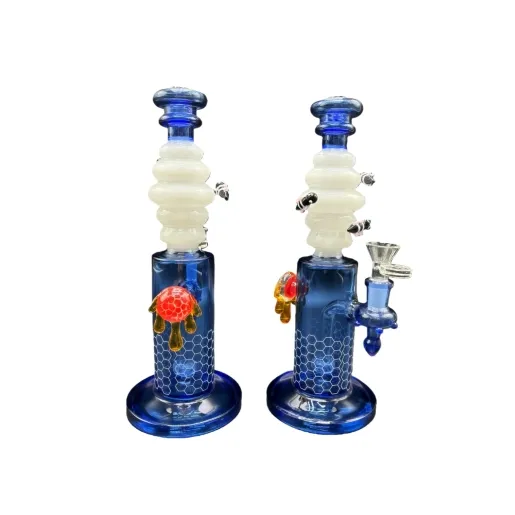
This is particularly relevant when buyers evaluate products through online catalogs or supplier photographs. Images are useful for understanding shape, finish, branding, and overall appearance, but they rarely communicate every specification required for accurate purchasing.
Professional buyers therefore need more than product photographs.
A useful product specification should communicate the characteristics that determine whether the item belongs in a particular application or product category.
Depending on the accessory, this may include dimensions, connection information, material, component configuration, packaging quantity, finish, or other relevant characteristics.
The purpose is not to create unnecessarily complicated documentation.
The purpose is to eliminate ambiguity.
Standardized Product Information Makes Purchasing Easier
A supplier offering vape accessories wholesale may have a large product catalog containing many similar SKUs.
If every product is described differently, buyers must repeatedly interpret the information.
One product might list dimensions in one format.
Another might emphasize material.
A third might use an internal supplier code that does not match the buyer’s warehouse system.
Standardized product information creates a common language between supplier and buyer.
A useful specification structure can include:
- Product name
- SKU or model number
- Product category
- Material
- Dimensions
- Available variations
- Packaging configuration
- Customization options
- Minimum order quantity
- Sample availability
- Carton information
The exact fields can vary according to the product category, but consistency is valuable across the entire catalog.
SKU Codes Should Communicate More Than a Product Name
Product names are often designed for marketing.
SKU codes serve a different purpose.
A good internal SKU system helps purchasing teams distinguish between products that may have similar names but different specifications.
For example, variations in size, finish, packaging, or configuration can be represented through a structured code.
This becomes increasingly important as the product range expands.
A small business might manage twenty products manually.
A distributor with hundreds of SKUs cannot rely on memory.
Structured SKU identification reduces the possibility of selecting the wrong variation during purchase orders and makes communication between purchasing, sales, warehouse, and accounting teams easier.
Samples Should Become Specification References
A product sample is more than a physical demonstration.
For recurring wholesale programs, an approved sample can become a reference point for future production and purchasing communication.
After a buyer approves a sample, the supplier can record the relevant product information associated with that sample.
This may include:
- Product dimensions
- Material specification
- Surface finish
- Logo placement
- Packaging format
- Component configuration
- Color reference
- Label requirements
The purpose is to create a shared understanding of what has actually been approved.
This becomes especially useful when a product is reordered several months later.
Instead of relying entirely on old emails or product photographs, both parties can refer back to an established specification.

Compatibility Information Should Be Clear Before Ordering
A common purchasing problem occurs when buyers assume compatibility based on appearance or general product category.
A professional purchasing process should confirm compatibility before an order is finalized.
This is particularly important when an accessory has specific connection, size, or configuration requirements.
The supplier should provide accurate specifications, while the buyer should confirm that those specifications correspond with the intended retail product or customer application.
This creates a simple but important responsibility on both sides.
The supplier communicates what the product is.
The buyer confirms where it is intended to be used.
Clear communication at this stage can prevent significantly more complicated issues later.
Product Naming Can Create Hidden Confusion
Naming conventions are often overlooked.
A manufacturer may use one product name internally while a distributor uses another name for its sales catalog.
A retailer may then create a third name for its customers.
This can create confusion when an order needs to be repeated.
A stronger system connects internal SKU numbers with customer-facing product names.
For example, a supplier’s internal product code can remain stable while the buyer uses a branded product name for retail purposes.
This allows marketing language to change without changing the underlying purchasing reference.
For businesses managing vape accessories wholesale, this separation can make long-term catalog management much easier.
Dimensions Need Consistent Measurement Methods
Measurements appear straightforward until different suppliers measure the same type of product differently.
One manufacturer may measure an overall length.
Another may measure only the usable section.
A third may round the number.
Small inconsistencies can become problematic when products are being compared, packaged, displayed, or listed online.
A professional wholesale workflow should therefore establish consistent measurement conventions.
The goal is not to make every product conform to the same dimensions.
The goal is to ensure that the information is measured and presented consistently.
This is especially important for distributors that import products from multiple factories and then combine them into one commercial catalog.
Materials Should Be Identified Clearly
Material descriptions also deserve attention.
Terms such as metal, glass, silicone, plastic, or alloy can be too broad for some purchasing situations.
Buyers may require more specific information depending on the product category and market requirements.
Clear material documentation helps purchasing teams compare products more accurately.
It can also support packaging, product descriptions, compliance documentation, and customer service.
For private-label brands, material information may become part of the internal product specification even when the customer-facing product page uses simpler language.
Variation Management Becomes Important as Catalogs Grow
Color and finish variations can quickly multiply the number of SKUs.
A single product may be available in several colors, finishes, sizes, or packaging options.
If these variations are not structured correctly, the product catalog can become difficult to manage.
Instead of treating every variation as an unrelated product, buyers can establish a parent product structure with defined variations.
This makes purchasing data easier to organize while still allowing the sales team to present different options to customers.
It also makes it easier to identify which variations are custom and which are standard.
Customization Requires a Separate Specification Layer
Customization introduces another level of complexity.
A standard product may have one fixed specification.
A private-label version may involve custom colors, logo placement, packaging, inserts, labels, or other requirements.
These details should not be left only in informal conversations.
They should be documented as part of the production specification.
A clear customization record can identify which elements are fixed and which are flexible.
For example, the product structure may remain unchanged while the exterior branding changes.
Alternatively, a buyer may request modifications to dimensions or components.
The more clearly these differences are documented, the easier it becomes for the manufacturer to reproduce the approved version accurately.
Packaging Specifications Belong in the Product Record
Packaging should not be treated as a separate issue from product data.
A wholesale buyer may need to know whether an item is individually packaged, grouped in inner boxes, or packed directly into master cartons.
Packaging quantity affects purchasing, warehouse operations, shipping calculations, and retail presentation.
For distributors, carton information is particularly useful because it supports logistics planning.
For private-label brands, packaging specifications also become part of brand consistency.
A complete product record therefore benefits from including both product specifications and packaging information.
Digital Catalogs Need Structured Information
Modern B2B buyers increasingly research products digitally before contacting suppliers.
A supplier’s website, PDF catalog, product sheet, or online ordering system may become the first place where a purchasing team evaluates a product.
If specifications are inconsistent across these channels, buyers may become uncertain about which information is correct.
A structured product database can help synchronize product information across sales materials.
The same core data can then support:
- Website product pages
- Sales catalogs
- Quotation documents
- Purchase orders
- Packaging labels
- Internal databases
- Customer service references
This reduces the need to recreate product information repeatedly.
Clear Specifications Improve Sales Conversations
Specification management is not only useful for purchasing departments.
Sales teams also benefit.
When customers ask about a product, sales representatives can respond using standardized information instead of relying on memory.
This is particularly important for B2B buyers who may ask detailed questions before placing an order.
A sales team that can quickly provide accurate product information appears more organized and reduces unnecessary back-and-forth communication.
The result is a more efficient purchasing conversation.
Product Data Supports Better Private-Label Projects
Private-label brands often manage several layers of information at the same time.
There is the underlying product specification.
There is the brand identity.
There is the packaging design.
There are retail descriptions.
There may also be different versions for different markets.
Without a structured product record, these details can become difficult to coordinate.
A private-label development process should therefore separate product specifications from marketing descriptions while connecting both through a consistent SKU or model number.
This makes future changes easier to manage.
If the packaging changes but the product remains the same, the core product record does not need to be recreated.
If the product itself changes, the version can be updated accordingly.
Version Control Matters for Repeat Orders
Products sometimes evolve.
A manufacturer may improve a component, change a supplier, modify packaging, or update a production process.
These changes should be documented.
Otherwise, a buyer may reorder a product expecting the previous version and receive a slightly different configuration.
Version control helps establish what changed and when.
For recurring vape accessories wholesale programs, this can be particularly useful because products may remain active for several years.
A simple version reference can prevent confusion between older and newer specifications.
Better Documentation Reduces Purchasing Errors
Purchasing mistakes are rarely caused by one major failure.
They often come from small communication gaps.
An unclear product name.
A missing dimension.
An outdated photograph.
An incorrect SKU.
An undocumented packaging change.
A misunderstood customization request.
Individually, each issue appears minor.
Together, they can create significant operational problems.
Standardized documentation addresses these small gaps before they become larger issues.
It gives purchasing teams a reliable reference when preparing orders and gives suppliers a clearer production target.
A Supplier Should Be Able to Explain Its Product Clearly
The quality of product information can reveal something about the supplier’s overall operating system.
A manufacturer that understands its products should generally be able to explain their specifications, available variations, packaging structure, customization options, and production requirements clearly.
This does not mean a supplier needs a massive technical database.
Even a well-organized product sheet can provide considerable value.
For buyers evaluating a vape accessories wholesale supplier, the ability to communicate product information clearly can therefore be an important part of the supplier evaluation process.
Compatibility Becomes More Important as Distribution Expands
A small retailer may be able to manage product information manually.
As distribution expands, the consequences of inconsistent data become larger.
A distributor may supply multiple retailers.
Those retailers may publish the products across different ecommerce platforms.
Sales representatives may use separate catalogs.
Warehouse teams may work with different internal systems.
In this environment, standardized specifications become infrastructure.
The information must remain consistent as it moves from manufacturer to distributor, from distributor to retailer, and eventually to the customer.
Building a Specification-First Wholesale Workflow
A more reliable wholesale workflow can begin before the purchase order is created.
The supplier provides the standard product information.
The buyer confirms the required specifications.
Samples are reviewed where necessary.
Approved specifications are recorded.
The SKU is assigned.
Customization requirements are documented separately.
Packaging information is confirmed.
The purchase order references the approved product record.
Future orders use the same reference unless a documented change is introduced.
This process may appear administrative, but it can significantly simplify repeated purchasing.
The objective is to make every subsequent order easier than the previous one.
Turning Product Information Into a Long-Term Asset
Product specifications should not disappear after an order is completed.
They can become part of the buyer’s long-term purchasing database.
Historical specifications can support future negotiations, product comparisons, customer service, catalog updates, and new product development.
For a growing business, this accumulated information becomes increasingly valuable.
The company no longer has to rediscover the same details every time it evaluates a product.
Instead, each purchasing cycle adds to an increasingly organized knowledge base.
Conclusion
Successful vape accessories wholesale purchasing depends on more than finding attractive products at competitive prices. Accurate specifications, clear compatibility information, standardized SKU systems, documented samples, consistent measurements, material records, packaging details, and version control all contribute to a more reliable B2B purchasing process.
For retailers, this can reduce ordering confusion and improve product communication. For distributors, standardized product data makes large catalogs easier to manage. For private-label brands, detailed specifications create a stronger foundation for customization and repeat production.
The broader lesson is that product information is part of the product itself in a modern wholesale environment. When manufacturers and buyers establish a shared specification system, fewer details are left to assumption, repeat orders become easier to manage, and product information can remain consistent from factory production through wholesale distribution and retail presentation.
That makes vape accessories wholesale not simply a transaction between buyer and supplier, but a structured process in which accurate product data supports every stage of the commercial relationship.