
Choosing a supplier is rarely a one-time decision for a growing smoke shop or distribution business. The first order may begin with a product inquiry, a quotation, or a sample request, but the real supplier evaluation continues throughout the purchasing relationship.
For businesses working with a smoke shop wholesale supplier, the most useful evaluation process goes beyond comparing product photographs and wholesale prices. A supplier may have attractive products but limited production flexibility. Another may have strong manufacturing capacity but weak communication. A third may provide excellent samples but struggle to maintain consistency during recurring orders.
These differences are difficult to understand from a single quotation.
A more practical approach is to build a supplier evaluation record that tracks the information collected at different stages of cooperation. Product information, sample performance, communication quality, customization capability, production organization, packaging, documentation, and order execution can all become part of the evaluation.
This creates a more complete picture of the supplier.
It also helps purchasing teams avoid making every new supplier decision from the beginning.
The First Evaluation Starts Before the First Order
Supplier evaluation begins during the initial communication stage.
The first interaction can reveal how organized a manufacturer or wholesale company is when responding to a professional buyer.
A purchasing team may request a catalog, product specifications, sample information, customization details, packaging options, and production information.
The response itself becomes useful information.
Are the answers complete?
Are product specifications clearly explained?
Does the supplier understand the buyer’s requirements?
Are questions answered consistently?
Does the supplier identify information that the buyer may have overlooked?
None of these factors should be considered independently, but together they can help establish an initial supplier profile.
A professional smoke shop wholesale supplier should be able to communicate its capabilities without forcing the buyer to repeatedly request basic information.
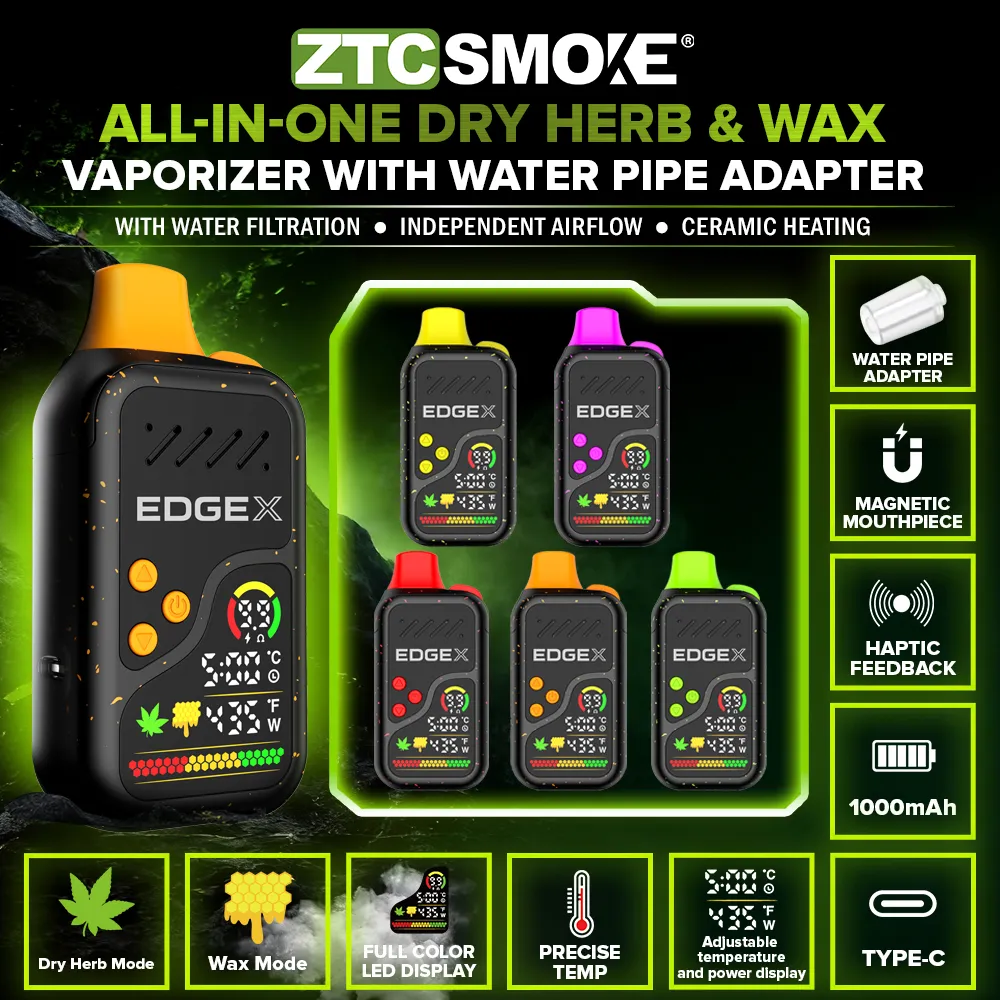
Product Range Should Be Evaluated for Relevance
A large catalog does not automatically mean a supplier is suitable.
The more important question is whether the product range is relevant to the buyer’s business.
A supplier may offer hundreds of products but have little experience with the specific categories a smoke shop wants to develop.
Another supplier may have a smaller catalog but stronger expertise in the categories that matter most to the buyer.
During evaluation, buyers can organize products by category and identify which items are standard, which are customizable, and which require special production arrangements.
This provides a clearer understanding of what the supplier can actually support.
For a long-term relationship, relevance is often more useful than simply counting the number of available SKUs.
Samples Reveal Information That Catalogs Cannot
A sample is one of the most useful stages of supplier evaluation because it moves the assessment from digital information to physical evidence.
Buyers can examine construction, finish, packaging, dimensions, branding execution, and overall presentation.
The sample also provides an opportunity to compare the supplier’s actual product with the product description originally provided.
This comparison can reveal whether the supplier’s catalog accurately represents its products.
For private-label buyers, the sample stage becomes even more important because customization needs to be evaluated before larger production begins.
The sample therefore becomes both a product evaluation tool and a supplier evaluation tool.
Sample Handling Is Also Part of the Evaluation
The product itself is not the only thing buyers should observe during the sample stage.
The sample process can reveal how the supplier manages requests.
For example, buyers can record how long it takes to confirm sample requirements, whether the requested specifications are understood correctly, whether packaging is prepared professionally, and whether questions are addressed during the process.
A supplier that communicates clearly during a small sample project may be easier to work with when the order becomes significantly larger.
This does not guarantee future performance, but it provides useful evidence.
Manufacturing Capability Needs Context
Production capacity is another area that should be documented carefully.
Suppliers often describe themselves using terms such as factory, manufacturer, wholesale supplier, OEM provider, or private-label partner.
These descriptions can mean different things.
A buyer should therefore understand which production capabilities are handled directly and which processes may involve external partners.
Relevant information can include:
- Standard production categories
- Custom manufacturing capability
- Available production equipment
- Typical production arrangements
- Packaging capability
- Custom branding options
- Production planning procedures
- Quality inspection processes
The objective is not to demand unnecessary technical information.
It is to understand how the supplier can support the buyer’s actual purchasing requirements.
Communication Should Be Evaluated Over Time
Supplier communication cannot be accurately evaluated through one email.
A better approach is to observe communication across several stages.
Initial inquiry.
Sample confirmation.
Specification approval.
Quotation.
Purchase order.
Production updates.
Packaging confirmation.
Shipping coordination.
Each stage creates another opportunity to evaluate communication.
The buyer can pay attention to whether information remains consistent and whether previously agreed requirements are remembered.
For a smoke shop wholesale supplier, this consistency becomes particularly important when a buyer manages multiple products at the same time.
Documentation Creates a Record of the Relationship
Good supplier evaluation depends on records.
A purchasing team can maintain a basic supplier file containing important information such as:
Company profile: Basic supplier identity and business scope.
Product profile: Main categories, standard products, and customization capabilities.
Sample record: Samples received, dates, specifications, and evaluation notes.
Quotation history: Prices and commercial conditions associated with different products.
Production record: Order quantities, production timelines, and special requirements.
Packaging record: Approved packaging formats and branding specifications.
Communication record: Important decisions and changes.
The purpose is not to create unnecessary paperwork.
It is to make supplier performance easier to understand over time.
Order Accuracy Is More Informative Than Promises
A supplier can describe its capabilities very effectively before receiving an order.
Actual orders provide stronger evidence.
When the first commercial order is placed, buyers can compare the final shipment with the original agreement.
Were the correct SKUs supplied?
Were the quantities correct?
Did the approved product specifications remain unchanged?
Was the packaging prepared according to the agreed requirements?
Were special instructions followed?
These observations should become part of the supplier record.
Over several orders, patterns become easier to identify.
Production Timing Should Be Recorded, Not Assumed
Production lead time is another area where buyers benefit from maintaining historical information.
A supplier may provide an estimated production schedule, but actual production timing can vary according to order size, customization, seasonality, material availability, and production complexity.
Instead of relying on a single estimate, buyers can record actual timelines from previous orders.
This creates a more realistic planning reference.
For businesses that depend on regular smoke shop wholesale supplier relationships, historical production data can make future purchasing schedules easier to organize.
The purpose is not to demand that every order take exactly the same amount of time.
It is to understand the supplier’s normal operating range.
Customization Capability Should Be Documented Separately
A supplier may offer customization, but the meaning of customization can vary considerably.
Some suppliers may support only logo printing.
Others may provide custom colors, packaging, product modifications, or complete OEM/ODM development.
Buyers should therefore record customization capabilities in specific categories.
For example:
- Logo application
- Custom colors
- Custom finishes
- Custom packaging
- Custom labels
- Product modifications
- OEM development
- ODM development
- Private-label production
This makes future supplier comparisons more practical.
Instead of asking whether a supplier “offers customization,” the purchasing team can identify exactly what type of customization is available.
Packaging Capability Can Affect Supplier Fit
Packaging is increasingly connected to brand presentation.
For a standard wholesale product, simple packaging may be sufficient.
For a private-label program, packaging can become a major part of the product experience.
Supplier evaluation should therefore include packaging capability where relevant.
Buyers can record whether the supplier provides standard packaging, custom packaging, printed boxes, inserts, labels, or other branded materials.
The supplier’s ability to coordinate product and packaging production can simplify private-label purchasing.
Quality Evaluation Should Be Based on Repeatability
A single good sample provides useful evidence, but repeatability provides stronger evidence.
A supplier may produce an excellent sample under controlled conditions.
The more important question is whether the same specification can be reproduced consistently during commercial production.
This is why supplier evaluation should continue after the first order.
Buyers can compare subsequent shipments against previously approved samples and specifications.
If the products remain consistent, that becomes part of the supplier’s performance history.
If significant differences appear, the buyer can document them and discuss corrective action.
Product Changes Need to Be Communicated
Manufacturing environments sometimes change.
A supplier may update materials, components, packaging, equipment, or production processes.
Changes are not necessarily negative.
The important issue is whether they are communicated clearly when they affect the approved product.
A purchasing record should therefore include significant product revisions.
This can prevent a common problem in repeat purchasing: the buyer reorders an old SKU expecting the previous specification while the supplier has moved to a different version.
Clear version information keeps both sides aligned.
Supplier Evaluation Should Include Business Flexibility
B2B purchasing rarely follows a perfectly fixed pattern.
A retailer may need to adjust quantities.
A distributor may introduce a new product.
A private-label brand may modify packaging.
A seasonal order may require a different production schedule.
The supplier’s ability to respond to reasonable changes can therefore become part of the evaluation.
Flexibility does not mean accepting every request without limits.
It means understanding how the supplier handles changes and whether the commercial relationship can adapt when business requirements evolve.
Low MOQ Can Support New Product Testing
Minimum order quantity is another factor that should be documented.
For established products, larger quantities may be normal.
For new products, however, buyers may want to test the market before committing to a major production run.
A supplier capable of supporting lower initial quantities can provide greater flexibility during this stage.
This can be particularly relevant for private-label brands and smaller smoke shops that are expanding their product ranges.
When evaluating a smoke shop wholesale supplier, buyers can therefore record standard MOQ, customized MOQ, sample options, and whether initial test orders are possible.
The Supplier’s Product Development Process Matters
Some buyers need only standard products.
Others want to create products that are more closely aligned with their brand identity.
For the second group, supplier evaluation should include product development capability.
Questions may include:
Can the supplier work from drawings?
Can it review product concepts?
Can it provide prototypes?
Can it modify existing products?
Can it coordinate custom packaging?
Can it manage multiple development stages?
These capabilities can become increasingly valuable as a brand grows.
A supplier that supports only standard products may be perfectly suitable for one business but less suitable for another pursuing private-label expansion.
A Supplier Scorecard Can Organize Information
Instead of relying on memory, purchasing teams can create a supplier scorecard.
The scorecard does not need to produce a simplistic overall number.
Its purpose is to organize evidence.
Categories can include:
| Evaluation Area | Information to Track |
|---|---|
| Product Range | Relevant categories and available SKUs |
| Samples | Sample quality, accuracy, and handling |
| Communication | Response clarity and consistency |
| Production | Capabilities and actual lead times |
| Customization | Branding, packaging, OEM, and ODM options |
| Documentation | Product specifications and records |
| Order Execution | Quantity, specification, and packaging accuracy |
| Flexibility | Ability to handle reasonable changes |
| Repeatability | Consistency across recurring orders |
| Development | Support for new product projects |
This format gives purchasing teams a structured reference without reducing supplier evaluation to one simple metric.
Historical Performance Becomes More Valuable With Time
The first supplier evaluation is based largely on available information.
The second evaluation includes actual experience.
The third may include several orders of historical performance.
This means supplier knowledge becomes more valuable as the relationship develops.
A purchasing team that maintains good records can identify patterns that would otherwise be forgotten.
Perhaps one supplier performs especially well with custom packaging.
Another may specialize in standard products.
Another may be particularly flexible with smaller production quantities.
These distinctions help buyers assign different suppliers to different purchasing requirements.
Different Suppliers Can Serve Different Roles
A business does not necessarily need to force every supplier into the same role.
One supplier might support standard high-volume products.
Another might specialize in private-label projects.
Another might provide specific categories or distinctive designs.
The supplier evaluation process can therefore help businesses understand where each supplier fits best.
This is particularly useful for growing distributors with broader product requirements.
Instead of searching for one company that does absolutely everything, purchasing teams can build a more organized supplier network based on actual capabilities.
Supplier Relationships Should Be Reviewed Periodically
Supplier evaluation should not end after onboarding.
Business conditions change.
Product categories change.
Customer expectations change.
Production capabilities can change.
A supplier that was suitable for one purchasing stage may become more or less suitable as the buyer’s business develops.
Periodic reviews allow the purchasing team to update supplier information and identify areas where communication or specifications should be improved.
The review does not need to be complicated.
Even a simple annual update of product capabilities, packaging options, MOQ, customization services, and recent order history can keep the supplier database useful.
Turning Supplier Evaluation Into a Purchasing System
The real value of supplier evaluation comes when the information influences future purchasing decisions.
New suppliers can be evaluated using the same framework.
Existing suppliers can be reviewed using historical performance.
New products can be matched with suppliers according to manufacturing capabilities.
Private-label projects can be assigned based on customization experience.
Repeat orders can reference previous specifications.
Over time, the purchasing department develops something more valuable than a supplier contact list.
It develops a working map of its supply network.
What a Long-Term Smoke Shop Wholesale Supplier Should Provide
A long-term supplier relationship is built through repeated commercial interactions rather than a single successful order.
For buyers, useful supplier characteristics include clear product information, reliable communication, documented specifications, appropriate manufacturing capabilities, practical customization support, organized packaging processes, and consistent execution.
A smoke shop wholesale supplier does not need to meet every possible requirement for every business. What matters is whether its capabilities align with the buyer’s actual operating model and whether those capabilities can be demonstrated through real purchasing experience.
This distinction helps buyers evaluate suppliers more realistically.
Conclusion
Selecting a smoke shop wholesale supplier is more effective when supplier evaluation is treated as an ongoing process rather than a one-time comparison.
Catalog information provides the starting point. Samples provide physical evidence. Communication reveals how requirements are handled. Commercial orders provide real performance data. Repeat orders reveal consistency. Customization projects demonstrate development capability. Historical records then turn all of this information into a practical purchasing reference.
For smoke shops, distributors, wholesalers, and private-label brands, maintaining a structured supplier profile can make future sourcing decisions more organized and transparent. It allows purchasing teams to understand not only what a supplier sells, but also how that supplier performs across the different stages of a B2B relationship.
The strongest supplier database is therefore not simply a list of factories and contact details. It is a record of capabilities, specifications, communication, production experience, and commercial history. As the business grows, that information can become an important foundation for more controlled sourcing, better supplier coordination, and longer-term wholesale development.