
For many wholesale buyers, finding an existing product from a catalog is only the beginning of product development. As competition increases, distributors and retailers often need products with a more distinctive appearance, customized packaging, private-label elements, or a product structure designed specifically for their market.
This is where OEM and ODM manufacturing become increasingly important in the glass pipe wholesale industry.
Instead of choosing only from finished products, wholesale buyers can work directly with manufacturers to develop products according to specific commercial requirements. The process can involve concept development, design communication, sample production, revisions, approval, production preparation, and final manufacturing.
For companies purchasing smoking accessories wholesale, this approach creates an opportunity to build a product collection that is different from standard catalog offerings. Rather than competing only through price, buyers can develop products that reflect their own market positioning and customer requirements.
A professional smoke shop wholesale supplier should therefore have more than manufacturing capacity. It should also understand how to convert an initial product idea into a practical manufacturing project.
In the wholesale bongs USA market, this capability can be particularly valuable. Buyers may understand what their customers want but may not have an internal product-development team capable of converting those ideas into production-ready specifications. A capable manufacturing partner can bridge this gap.
At ZTCSMOKE and Oilseedlife, we view OEM and ODM development as a collaborative process. The strongest results usually come from clear communication between the buyer’s commercial objectives and the factory’s manufacturing experience.
OEM and ODM Are More Than Adding a Logo
One common misunderstanding is that customization simply means placing a logo on an existing product.
Logo customization is one possible service, but professional OEM development can go much further.
Depending on the project, customization may involve:
- Product shape
- Product dimensions
- Color direction
- Surface treatment
- Decorative elements
- Packaging
- Collection structure
- Product naming
- Brand presentation
This makes OEM development fundamentally different from purchasing a standard product.
For a glass pipe wholesale customer, the objective may be to create something that still fits an established product category while offering a recognizable difference.
The manufacturer therefore needs to understand both the technical requirements and the commercial purpose behind the project.
Every Successful Project Begins With a Clear Brief
The first step in product development is communication.
A buyer may have a rough idea such as a particular shape, style, size, or visual concept. However, a factory needs enough information to translate that idea into a workable production plan.
A useful product brief may include:
- Target product category
- Approximate dimensions
- Preferred design direction
- Reference images
- Color preferences
- Branding requirements
- Packaging expectations
- Target quantity
- Desired delivery schedule
The information does not need to be perfect.
What matters is that the manufacturer understands the direction.
For a smoke shop wholesale supplier, asking the right questions at this stage can prevent major misunderstandings later.
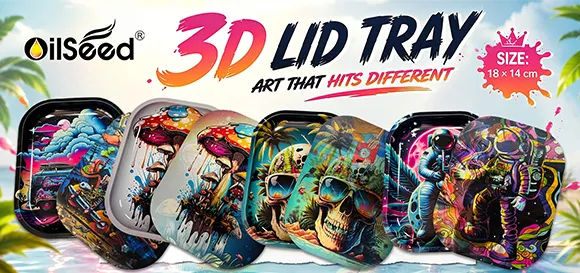
Reference Images Help Establish a Common Direction
Visual references are particularly useful during OEM development.
A buyer may use photographs, sketches, existing product examples, or design references to communicate the intended appearance.
However, reference images should be treated as communication tools rather than automatically assumed production specifications.
A photograph may show the desired overall shape but provide no information about dimensions, manufacturing tolerances, material requirements, or production feasibility.
This is where factory experience becomes important.
The manufacturer can identify which elements are practical, which require modification, and which need further clarification.
Product Concepts Need to Be Converted Into Manufacturing Information
A concept is not yet a product.
The factory needs to convert the concept into information that production teams can actually use.
This can include:
- Dimensions
- Structural details
- Component relationships
- Surface requirements
- Color references
- Branding locations
- Packaging specifications
For businesses working in glass pipe wholesale, this transition from creative concept to technical specification is one of the most important stages of the entire process.
A beautiful idea that cannot be manufactured consistently is not yet a successful product.
Design Adjustments Are a Normal Part of Development
First concepts rarely become final products without modification.
A design may look excellent visually but require adjustments for manufacturing.
For example, the factory may identify areas where:
- A shape needs to be simplified
- Dimensions need adjustment
- Certain details require redesign
- Packaging needs additional protection
- Production efficiency could be improved
These changes do not necessarily mean that the original idea was wrong.
They are part of translating design concepts into real products.
An experienced smoking accessories wholesale manufacturer can use its production knowledge to suggest alternatives while preserving the central concept.
Prototype Development Turns an Idea Into Something Tangible
Once the basic specifications are established, the next stage is prototype development.
A physical prototype allows both sides to evaluate characteristics that are difficult to understand through drawings or photographs.
The buyer can assess the overall appearance and compare the prototype against the original concept.
The manufacturer can evaluate production feasibility and identify technical improvements.
This stage is particularly important in glass pipe wholesale projects because physical proportions, surface appearance, and overall visual balance can be difficult to judge accurately through digital references alone.
The First Sample Should Be Treated as a Development Tool
The first sample is not always expected to be perfect.
Its purpose is to reveal what works and what needs to change.
A useful sample review can examine:
Overall Appearance
Does the product reflect the original design direction?
Dimensions
Are the proportions appropriate?
Visual Details
Are colors, decorative elements, and finishing aligned with expectations?
Branding
Is the brand placement suitable?
Packaging
Does the proposed packaging support the product appropriately?
This process turns subjective opinions into specific revision requirements.
Sample Revision Is Where Collaboration Becomes Important
After reviewing the first sample, the buyer may request modifications.
These changes should ideally be documented clearly.
Instead of saying that a product should be “slightly bigger” or “more refined,” the buyer and manufacturer can identify specific changes.
For example:
- Increase a specific dimension
- Modify a particular shape
- Change a color reference
- Adjust branding placement
- Revise packaging details
Clear revision instructions make the second development stage more efficient.
For a professional smoke shop wholesale supplier, organized sample revision can significantly reduce unnecessary back-and-forth communication.
Too Many Changes Can Delay Product Development
Customization provides flexibility, but excessive changes can make development inefficient.
If specifications continue changing after every sample, the manufacturer may repeatedly restart parts of the development process.
This can increase:
- Development time
- Sample costs
- Communication requirements
- Production complexity
For smoking accessories wholesale buyers, establishing a clear decision-making process can therefore make OEM development significantly smoother.
The ideal approach is not to eliminate revisions.
It is to make each revision purposeful.
Sample Approval Creates a Development Milestone
Once the buyer is satisfied with the product, the sample can be formally approved.
This creates an important transition.
Before approval, the product is still under development.
After approval, the manufacturer can begin preparing for production based on the agreed reference.
For glass pipe wholesale projects, the approved sample can serve as an important physical benchmark for subsequent production.
It gives both sides a common reference for understanding the intended final product.
Production Preparation Is Different From Sample Production
A prototype may be produced individually or in a relatively small development process.
Mass production requires a more structured approach.
The factory may need to prepare:
- Production specifications
- Material requirements
- Packaging information
- Branding files
- Production procedures
- Inspection references
The goal is to make the approved product reproducible.
This is one of the biggest differences between product development and manufacturing.
Creating one product proves that the concept is possible.
Creating a commercial production process proves that the concept can be reproduced.
Private Label Projects Require Consistent Brand Information
For wholesale buyers developing private-label collections, brand information needs to be organized carefully.
The manufacturer may need:
- Logo files
- Brand guidelines
- Packaging artwork
- Label information
- Product naming
- Collection references
Clear brand files help prevent avoidable production errors.
For a smoke shop wholesale supplier, managing these assets correctly is especially important when working with multiple customized products for the same customer.
Consistency across a collection can make the final product range appear significantly more professional.
Packaging Development Should Happen Alongside Product Development
Packaging should not always be treated as an afterthought.
The physical characteristics of the product influence packaging requirements.
At the same time, packaging can influence how the product is presented and transported.
For a glass pipe wholesale OEM project, packaging development may consider:
- Product dimensions
- Protection requirements
- Retail presentation
- Brand identity
- Package size
- Label placement
Developing packaging alongside the product can reduce the risk of discovering compatibility problems at the final stage.
Product Collections Can Be Developed Instead of Individual Products
OEM development becomes even more powerful when buyers think in terms of collections.
Instead of creating one isolated customized product, a buyer may develop several related products around the same design concept.
The collection could share:
- Similar visual elements
- Related colors
- Consistent branding
- Coordinated packaging
- Similar naming
For businesses operating in smoking accessories wholesale, collection-based development can create a stronger overall product identity than developing unrelated customized items.
MOQ Should Be Considered During Development
Minimum order quantities can influence product decisions from the beginning.
A customized product may require additional development work, special packaging, or dedicated production arrangements.
Before starting development, buyers should understand the commercial scale of the project.
Questions may include:
- What quantity is required?
- Will the product be reordered?
- Is customized packaging necessary?
- Will several products share the same design elements?
For a wholesale bongs USA buyer, understanding these factors early can help determine whether a customized project makes commercial sense.
Development Cost and Production Cost Are Different
Product development may involve expenses that are separate from normal production.
Depending on the project, costs can come from:
- Design work
- Prototype development
- Sample production
- Special packaging
- Customized components
Once the product enters regular production, the cost structure may change.
Wholesale buyers should therefore distinguish between development expenses and recurring manufacturing costs.
This creates a clearer financial picture before committing to a large project.
Communication Between Design and Production Teams Matters
A successful OEM project often requires communication across multiple factory functions.
The design team understands the visual concept.
The production team understands manufacturing requirements.
The quality team understands inspection criteria.
The packaging team understands the final presentation and protection requirements.
For a professional smoke shop wholesale supplier, coordination between these teams can determine whether the approved concept is successfully reproduced during manufacturing.
Production Documentation Helps Protect the Original Concept
Once an OEM product has been approved, its specifications should be documented.
This documentation can become the reference for future orders.
If the customer returns several months later, the manufacturer can use the previous development information instead of starting again from the beginning.
For glass pipe wholesale customers, this can be particularly valuable when products become part of a long-term collection.
The documentation effectively becomes the product’s manufacturing history.
Reorders Can Lead to Second-Generation Improvements
A customized product does not have to remain unchanged forever.
After the first commercial cycle, the buyer may identify opportunities for improvement.
These could involve:
- Updated colors
- Revised packaging
- New sizes
- Additional related products
- Small design refinements
This creates a second-generation development process.
Instead of constantly creating unrelated products, manufacturers and buyers can gradually improve successful concepts.
OEM Manufacturing Can Create Stronger Buyer-Supplier Relationships
When a supplier only provides standard products, the relationship can be relatively transactional.
OEM development creates deeper cooperation.
The buyer needs the factory to understand its requirements.
The factory needs the buyer to provide clear feedback.
Both sides participate in product development.
For smoking accessories wholesale companies, this can create stronger long-term cooperation because the supplier becomes familiar with the customer’s design preferences, product strategy, and development process.
Not Every Product Needs Full Customization
Customization should be used strategically.
For some products, standard catalog options may already provide everything a buyer needs.
For other products, customization may create a meaningful advantage.
The decision should depend on the commercial objective.
A buyer might use:
- Standard products for established categories
- Light customization for branding
- Full OEM development for flagship collections
This hybrid approach can provide flexibility without making every product development project unnecessarily complicated.
The Value of OEM Is in the Process, Not Just the Final Product
A successful OEM project is not simply a customized item.
It is a structured process that transforms an idea into a repeatable commercial product.
The process can be summarized as:
Concept → Brief → Design → Prototype → Revision → Approval → Production Preparation → Manufacturing → Future Improvement
Every stage contributes to the final result.
For a wholesale bongs USA buyer, this process provides a way to move beyond generic catalog purchasing.
For a glass pipe wholesale manufacturer, it provides an opportunity to demonstrate production knowledge and development capability.
For businesses in smoking accessories wholesale, it creates greater control over how products are developed and differentiated.
Choosing an OEM Manufacturing Partner
When evaluating a potential smoke shop wholesale supplier, buyers should look beyond the product catalog.
Important questions include:
- Can the manufacturer understand custom requirements?
- Can it communicate clearly during development?
- Can it provide samples?
- Can it manage revisions?
- Can it maintain approved specifications?
- Can it support repeat production?
- Can it coordinate customized packaging?
A manufacturer may have a large catalog but limited development capability.
Another manufacturer may have a smaller catalog but stronger OEM expertise.
For customized projects, development capability can be more important than catalog size.
Conclusion
OEM development gives wholesale buyers a different way to approach product creation. Instead of selecting only from existing catalogs, businesses can work with manufacturers to transform their own ideas into customized products and coordinated collections.
In the glass pipe wholesale industry, this process can involve concept development, reference materials, technical specifications, prototypes, sample revisions, approval, production preparation, and future product improvements. Each stage helps turn an initial idea into a product that can be reproduced commercially.
For businesses purchasing smoking accessories wholesale, OEM development can provide greater control over product differentiation, packaging, collection structure, and private-label presentation. Meanwhile, a capable smoke shop wholesale supplier can contribute manufacturing knowledge that helps buyers avoid unrealistic designs and develop products that are practical for commercial production.
The wholesale bongs USA market also demonstrates why this collaborative approach can be valuable. Buyers understand their customers and commercial objectives, while manufacturers understand production possibilities and limitations. When these two forms of knowledge are combined, product development becomes more efficient and more purposeful.
At ZTCSMOKE and Oilseedlife, we believe successful OEM manufacturing is built through communication, documentation, experimentation, and practical production knowledge. The goal is not simply to create a customized sample. The real objective is to transform an idea into a repeatable product that can become part of a sustainable wholesale collection.
A strong OEM partnership therefore begins long before mass production and continues long after the first sample is approved. When manufacturers and wholesale buyers work together throughout the entire development process, customization becomes more than a branding exercise—it becomes a structured path toward creating products with a clear identity and long-term commercial potential.