
In international wholesale manufacturing, quality is often discussed as if it were a simple characteristic: a product either has good quality or it does not. In reality, quality is a much more complex concept. For wholesale buyers, the real concern is not whether one individual product looks good, but whether an entire production batch can maintain consistent standards from the first unit to the last.
This distinction is particularly important in the glass pipe wholesale industry. A distributor purchasing a small sample may be satisfied with the appearance of the products, but a larger commercial order creates a different challenge. Variations in dimensions, finishing, color, surface appearance, packaging, or other production details can become more noticeable when hundreds or thousands of units are involved.
For manufacturers operating in the smoking accessories wholesale market, quality control must therefore be integrated into the manufacturing process rather than performed only at the end of production. A professional smoke shop wholesale supplier needs systems that allow quality standards to be defined, monitored, inspected, recorded, and continuously improved.
Consistency is what transforms manufacturing capability into dependable wholesale supply.
At ZTCSMOKE and Oilseedlife, we believe quality control is not simply a final inspection procedure. It is a complete manufacturing discipline that begins with product specifications and continues through production, inspection, packaging, and customer feedback.
Quality Starts With a Clear Product Specification
Before manufacturing begins, the product itself needs to be clearly defined.
A vague requirement such as “premium quality” does not provide a factory with enough information to establish a consistent production standard.
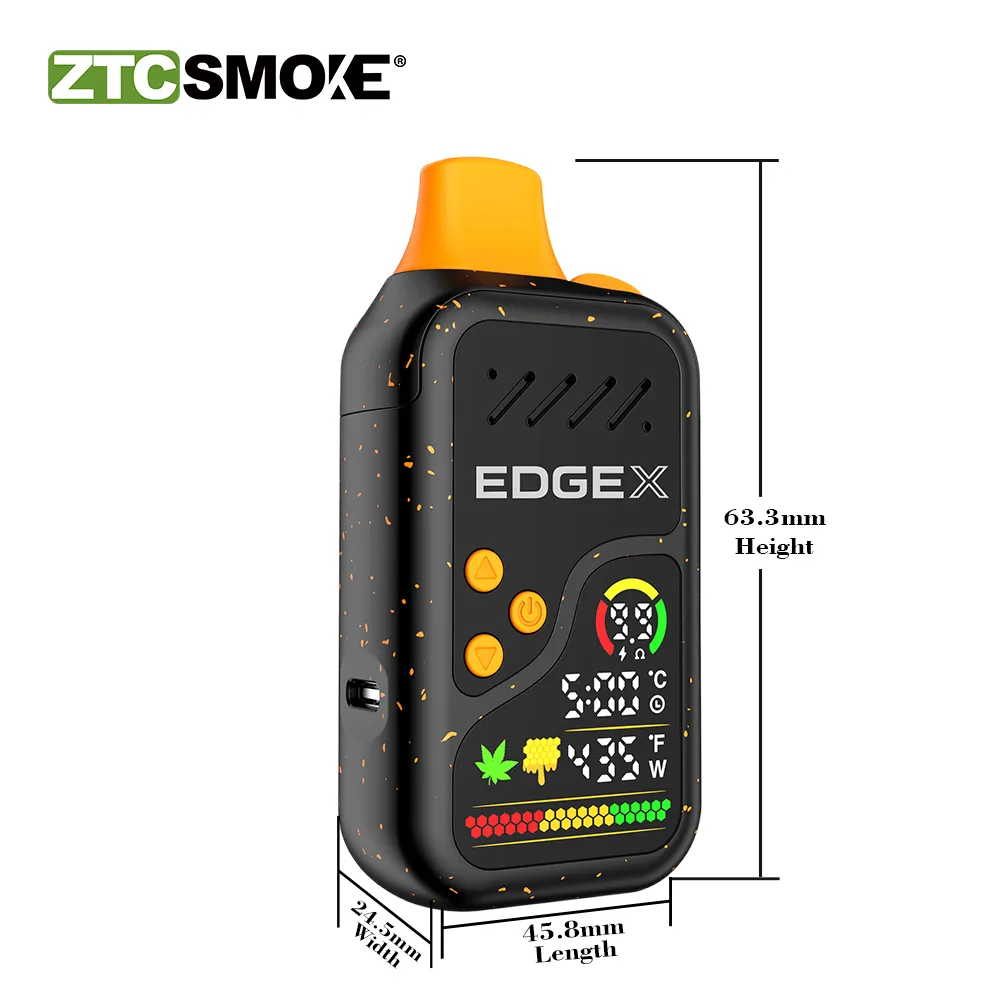
A professional glass pipe wholesale production specification may include:
- Product dimensions
- Shape requirements
- Material requirements
- Surface finish
- Color characteristics
- Logo placement
- Packaging requirements
- Acceptable production tolerances
The more clearly a product is defined, the easier it becomes to determine whether a finished unit meets the intended standard.
This is especially important for products that are reordered repeatedly. If specifications are documented properly, future production can be compared against the same reference instead of relying entirely on memory or subjective judgment.
Standardization Reduces Production Variation
Manufacturing hundreds of identical products is fundamentally different from producing a single prototype.
A prototype may be individually adjusted until it looks correct.
Mass production requires repeatability.
For businesses involved in smoking accessories wholesale, standardized manufacturing procedures help reduce differences between production batches.
Standardization can involve:
Production Procedures
Workers follow defined processes rather than relying entirely on personal judgment.
Reference Samples
Approved samples provide physical references for future production.
Inspection Standards
Quality teams use consistent criteria when evaluating products.
Documentation
Important specifications are recorded for future orders.
These systems allow a manufacturer to reproduce a product more reliably over time.
Incoming Material Control Is the First Quality Check
Quality problems can begin before production starts.
If incoming materials do not meet the required standard, manufacturing teams may struggle to produce consistent finished products.
A professional smoke shop wholesale supplier therefore needs to pay attention to material inspection and preparation.
Depending on the product, manufacturers may evaluate:
- Material consistency
- Surface condition
- Color characteristics
- Dimensions
- Cleanliness
- Compatibility with the intended production process
Controlling materials at the beginning of the process helps prevent avoidable problems later.
Quality control is strongest when problems are prevented rather than simply detected at the end.
Production Inspection Should Happen Throughout Manufacturing
Final inspection is important, but it should not be the only inspection stage.
If a problem is discovered only after an entire production run has been completed, correcting it can be expensive and time-consuming.
Continuous inspection allows manufacturers to identify issues earlier.
Production teams can monitor products at different stages to determine whether:
- Dimensions remain consistent
- Finishing remains uniform
- Colors remain within the expected range
- Production processes are operating correctly
- Packaging requirements are being followed
For glass pipe wholesale manufacturing, early detection is particularly valuable because production issues can sometimes affect an entire batch.
Visual Inspection Remains Important
Technology can support manufacturing quality, but human visual inspection remains valuable.
Experienced quality-control personnel can identify differences that may be difficult to capture through simple measurements.
Visual inspection may focus on:
- Surface appearance
- Finishing quality
- Color consistency
- Visible imperfections
- Product symmetry
- Overall presentation
The purpose is not to demand that every product look absolutely identical in every microscopic detail.
The purpose is to ensure that normal production variation remains within an acceptable commercial range.
Measurement Creates Objective Quality Standards
Visual inspection alone can become subjective.
Two people may have different opinions about whether a product is “slightly larger” or whether a finish is “close enough.”
Measurements create more objective standards.
Depending on the product, manufacturers can establish reference points for:
- Length
- Width
- Diameter
- Weight
- Component dimensions
- Packaging dimensions
For smoking accessories wholesale manufacturers, documented measurements help production teams communicate more accurately and make future reorders easier to manage.
Objective standards are especially important when customers require customized specifications.
Color Consistency Requires Additional Attention
Color can be one of the most challenging elements of product consistency.
Customers may expect a particular visual appearance, but production variables can sometimes create differences between batches.
For private-label or collection-based products, color consistency becomes even more important because several products may need to appear visually coordinated.
Professional glass pipe wholesale manufacturers can establish approved color references and inspection procedures to minimize unnecessary variation.
This allows future production to remain closer to the original approved appearance.
Finishing Quality Can Influence Perceived Product Value
Customers often judge manufacturing quality through visible finishing details.
Even when the basic product design remains unchanged, differences in surface finishing can influence how professional the product appears.
Quality-control teams may therefore evaluate:
- Surface smoothness
- Finishing consistency
- Edge appearance
- Visual cleanliness
- Decorative details
For a smoke shop wholesale supplier, consistent finishing helps maintain a stable product identity across different production batches.
Quality Control Should Continue Into Packaging
A product can meet manufacturing requirements and still experience problems during the packaging stage.
Packaging needs to protect the product while also maintaining the required presentation.
Quality checks can therefore continue through:
- Product placement
- Protective materials
- Label application
- Packaging alignment
- Quantity verification
- Carton identification
For glass pipe wholesale shipments, packaging consistency is especially important because the final packaged product is what the customer receives and evaluates.
Packaging inspection should therefore be considered part of product quality rather than a completely separate operation.
Batch Tracking Makes Problems Easier to Investigate
When a quality issue appears, manufacturers need to determine where and when it occurred.
Batch identification can help connect products with:
- Production dates
- Manufacturing teams
- Material batches
- Inspection records
- Packaging records
This information makes problem investigation more systematic.
Instead of asking broadly, “Why did this happen?”, the manufacturer can examine a specific production period or batch and identify potential causes.
For a growing smoking accessories wholesale manufacturer, traceable production records can significantly improve internal quality management.
Sample Approval Creates a Common Reference
For customized orders, an approved sample can become an important reference point.
Before mass production begins, the manufacturer and customer can agree on a representative sample covering important visual and functional characteristics.
The approved sample then becomes a benchmark for future production.
This can reduce disagreements because both sides have a physical reference rather than relying exclusively on photographs or written descriptions.
For glass pipe wholesale customization, sample approval can be especially useful when products involve specific colors, finishes, shapes, or branding requirements.
Quality Control Is Also About Process Improvement
Inspection should not simply identify products that fail to meet standards.
It should also identify why failures occur.
If the same issue repeatedly appears, the manufacturer should investigate the underlying process.
For example, recurring problems may indicate:
- An unclear production procedure
- Inconsistent material preparation
- Insufficient worker training
- Weak inspection criteria
- Inadequate process documentation
Addressing the underlying cause is more valuable than repeatedly removing defective products from finished batches.
This is where quality control becomes a continuous improvement system.
Employee Training Supports Consistency
Manufacturing standards are only effective when production teams understand them.
Employees need to know:
- What the product standard is
- Which defects are unacceptable
- Which variations are acceptable
- How inspections should be performed
- What to do when a problem is discovered
Regular training helps create a shared understanding of quality.
For a professional smoke shop wholesale supplier, employee knowledge is an important part of maintaining consistent production as the company grows.
Quality Standards Should Evolve With Customer Expectations
Quality requirements are not permanently fixed.
As markets change, customers may expect improvements in:
- Product appearance
- Packaging
- Consistency
- Product design
- Documentation
Manufacturers should therefore review their standards periodically.
Customer feedback can provide useful information about where improvements may be needed.
For companies operating in smoking accessories wholesale, this creates a feedback cycle between manufacturing and the market.
Different Product Lines May Need Different Standards
A single quality-control system does not necessarily mean every product should have identical inspection criteria.
Different product categories may have different priorities.
For example, one collection may emphasize visual finishing, while another may place greater importance on precise dimensions or packaging consistency.
A professional glass pipe wholesale manufacturer can establish category-specific standards while maintaining an overall company-wide quality philosophy.
This creates flexibility without sacrificing consistency.
Quality Is a Long-Term Business Investment
Quality control requires time, training, documentation, equipment, and management attention.
Some businesses attempt to reduce these costs by inspecting products only after manufacturing is complete.
However, poor quality can create additional costs through:
- Rework
- Replacements
- Customer complaints
- Production delays
- Lost repeat business
- Damaged reputation
Investing in quality management can therefore reduce larger costs later.
For a smoke shop wholesale supplier, consistent manufacturing creates a stronger foundation for long-term customer relationships.
Why Consistency Matters More Than One Perfect Sample
One excellent sample can attract a buyer.
Consistent production keeps the buyer.
This is one of the most important principles in wholesale manufacturing.
A distributor needs confidence that the products ordered next month or next year will maintain the same general quality standard as products purchased today.
For glass pipe wholesale, consistency creates predictability across product collections and future reorders.
For smoking accessories wholesale, it allows retailers to maintain stable product expectations.
For manufacturers, it creates a reputation based on repeatable performance rather than isolated successes.
Conclusion
Quality control in wholesale manufacturing is much more than checking finished products before shipment. It is a complete system that includes product specifications, material control, standardized production, continuous inspection, measurement, finishing evaluation, packaging checks, employee training, documentation, and ongoing process improvement.
For companies working in glass pipe wholesale, consistent production is especially important because buyers often need to reorder products while maintaining a similar standard across different production batches.
For businesses operating in smoking accessories wholesale, systematic quality management helps create reliable product collections and stronger long-term commercial relationships. Meanwhile, a professional smoke shop wholesale supplier can use quality-control systems to reduce variation, identify problems earlier, and continuously improve manufacturing performance.
At ZTCSMOKE and Oilseedlife, we believe real manufacturing quality is demonstrated through consistency. A successful factory should not only be capable of producing an excellent product once; it should have the processes, people, documentation, and inspection systems required to reproduce that standard again and again.
That is what turns manufacturing capacity into dependable wholesale value.